
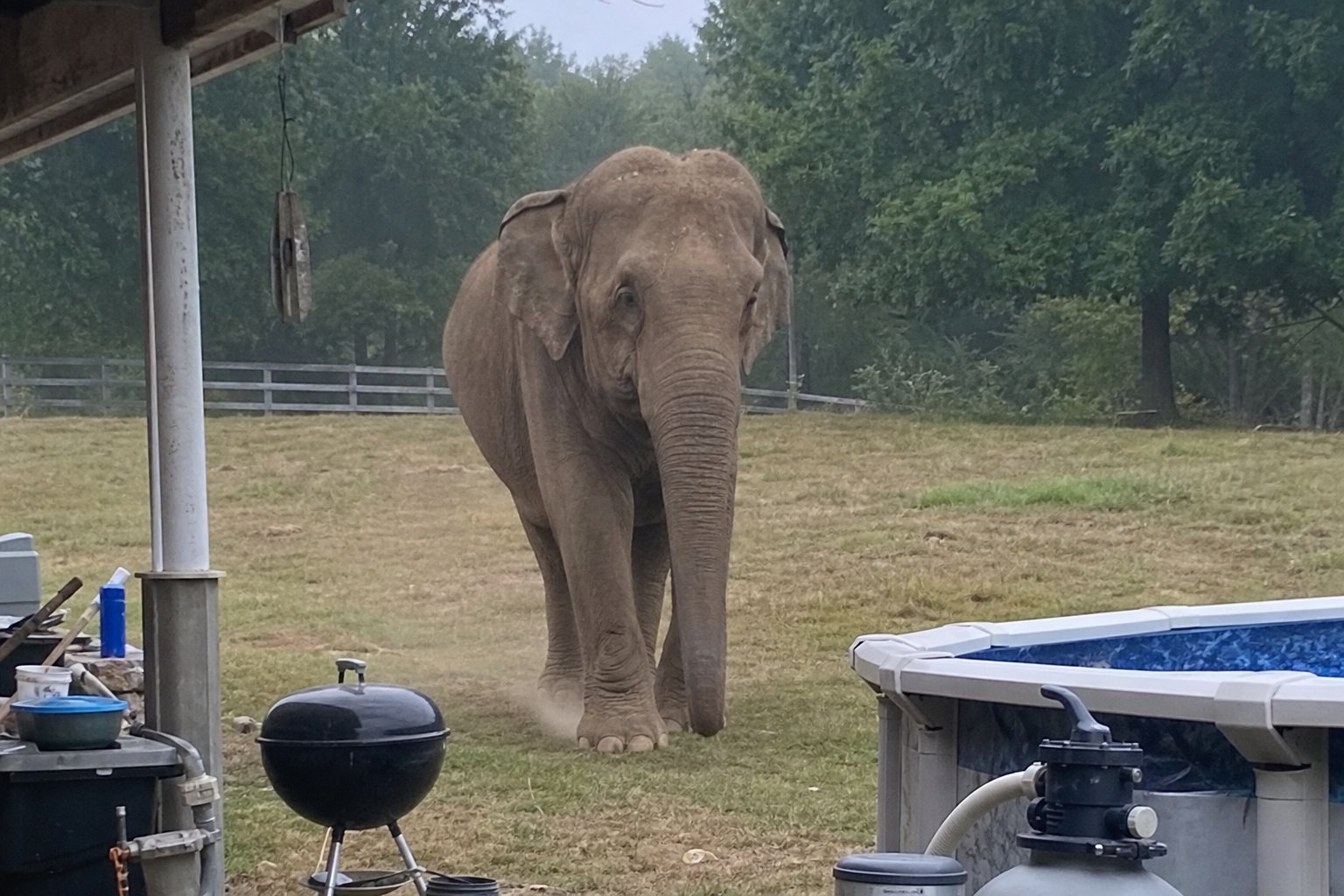
By the time she reaches the fence, there is no doubt left in anyone watching. She stretches her trunk through the gap between the bars and reaches for his shoulder, then his face, exactly the greeting the two of them used nine years earlier when she was still young enough to be hand-fed.
The handler keeps his hands open and lets her set the pace. He speaks to her in a quiet, steady voice. Experienced sanctuary staff never rush a moment like this, because elephants read tension in a human the same way a dog does, and a sudden move can push a happy greeting into something unpredictable.
- Advertisement -
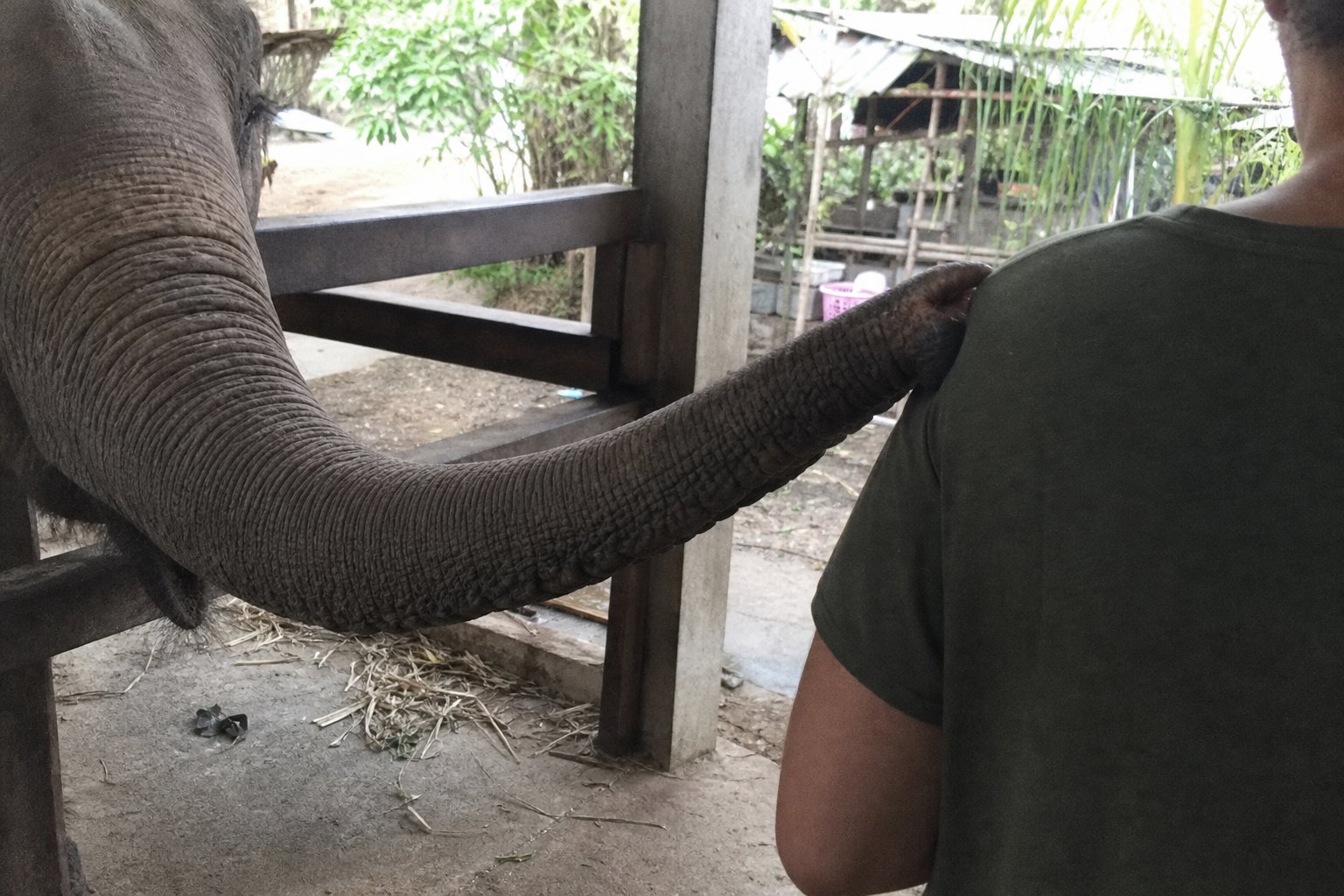
What the research literature calls social memory is not just face recognition. It is the memory of an entire relationship: the routine, the voice, the smell of the clothes, the way a particular person touches or feeds them. All of that bundled together is what lets an elephant walk straight to one human out of a crowd of strangers.
Matriarchs in the wild use the same system to keep track of hundreds of other elephants across a lifetime that can last more than sixty years. In captivity, that enormous mental library is turned on the handful of humans the animal has lived around closely. A caretaker who spent years at the sanctuary sits very near the top of that list.
- Advertisement -