
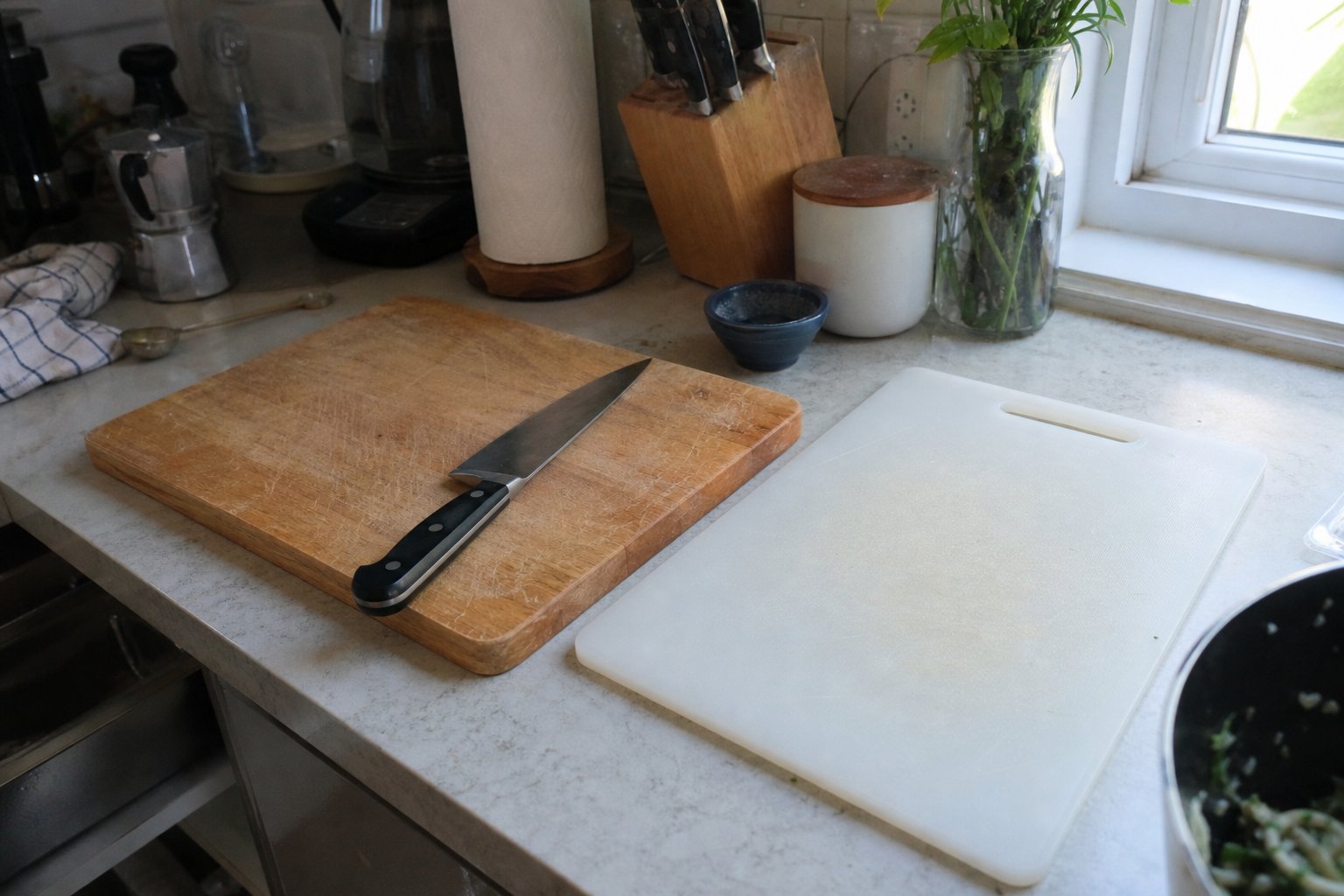
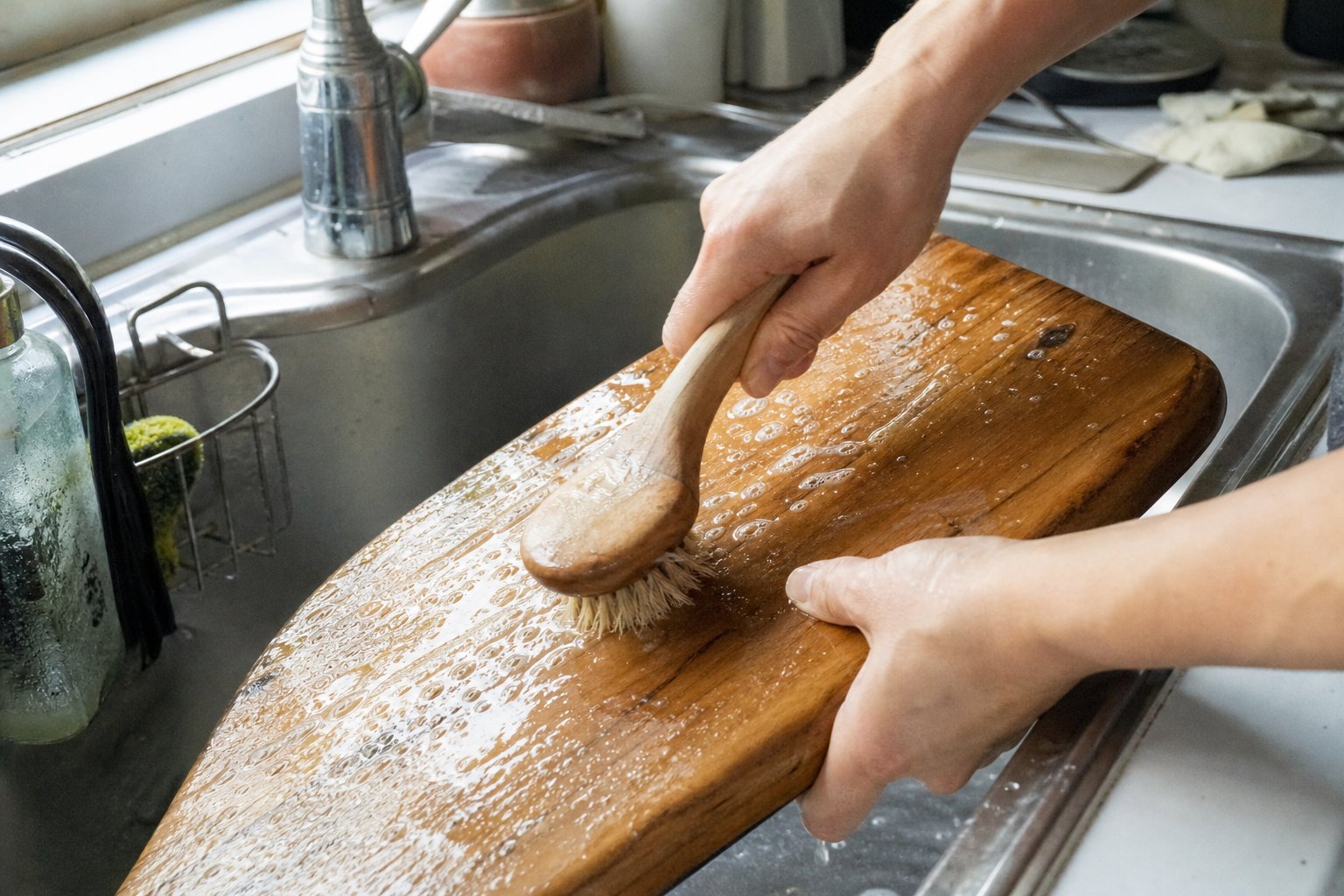
Cutting boards are one of the most-handled tools in a kitchen, and the question of wood versus plastic comes up every time a new one is bought. Food-safety research at the University of California, Davis in the 1990s, led by the late Dean O. Cliver, found that wooden cutting boards were comparable in kitchen safety to plastic boards for raw-meat prep when washed properly.
USDA food-safety guidance makes a separate point that matters more than the material: keep a dedicated board for raw meat, or use color-coded boards, so juices from raw chicken, beef or fish never touch produce that will be eaten uncooked.
What the research shows
Dean Cliver’s work at UC Davis in the 1990s tested wooden and plastic cutting boards after contact with raw-meat bacteria and reported that both materials could be kept safe in a home kitchen if they were washed properly. The study is widely cited because it pushed back on the idea that plastic is automatically the safer choice.
USDA food-safety guidance focuses less on which material to buy and more on cross-contamination. The advice is simple: keep a separate board for raw meat, poultry and seafood, and never use the same unwashed board for ready-to-eat food like salad or bread.
- Advertisement -
- Advertisement -